
This 2006 documentary by John Pilger examines the reality of American foreign policy towards South and Central America.
"The film tells a universal story, analysing and revealing, through vivid testimony, the story of great power behind its venerable myths. It allows us to understand the true nature of the so-called war on terror."
"President Bush has promised to rid the world of evil and to lead the great mission to build free societies on every continent. To understand such an epic lie is to understand history. Hidden history. Suppressed history. History that explains why we in the West know a lot about the crimes of others, but almost nothing about our own."
~John Pilger
Saturday, March 28, 2009
"The War On Democracy" by John Pilger

Friday, January 9, 2009
Palestine is Still the Issue
When a situation is as serious as that of the current Israeli assault on Gaza, it is only proper to demand an accurate explanation as to why it is occurring. Western media is skewed and Western governments defend Israel's actions perhaps merely issuing a hollow plea for care to be taken for civilian life.
 I just finished reading an article discussing the Palestinian casualties that have taken place since Israel began it's attack on Gaza, particularly child casualties: UN: 257 Palestinian children killed in Gaza. Certainly any article dealing with the suffering of children in any circumstance would emotionally affect most people but it is not only the fact that these children are suffering that is disturbing, but knowing that their suffering is only part of a much greater suffering and longtime injustice toward the Palestinian people.
My view of the situation in Israel was dramatically shifted when I first saw this documentary called Palestine is Still the Issue. This documentary provides important facts about the Israeli occupation and presents a reality that is much different than we are given here in America.
Friday, December 19, 2008
Freedom Next Time: Filmmaker & Journalist John Pilger on Propaganda, the Press, Censorship and Resisting the American Empire
“Liberal Democracy is moving toward a form of corporate dictatorship. This is an historic shift, and the media must not be allowed to be its façade...”
“That great whistleblower Tom Paine warned that if the majority of the people were denied the truth and the ideas of truth, it was time to storm what he called the Bastille of words. That time is now.”
JOHN PILGER: The title of this talk is Freedom Next Time, which is the title of my book, and the book is meant as an antidote to the propaganda that is so often disguised as journalism. So I thought I would talk today about journalism, about war by journalism, propaganda, and silence, and how that silence might be broken. Edward Bernays, the so-called father of public relations, wrote about an invisible government which is the true ruling power of our country. He was referring to journalism, the media. That was almost 80 years ago, not long after corporate journalism was invented. It is a history few journalist talk about or know about, and it began with the arrival of corporate advertising. As the new corporations began taking over the press, something called “professional journalism” was invented. To attract big advertisers, the new corporate press had to appear respectable, pillars of the establishment—objective, impartial, balanced. The first schools of journalism were set up, and a mythology of liberal neutrality was spun around the professional journalist. The right to freedom of expression was associated with the new media and with the great corporations, and the whole thing was, as Robert McChesney put it so well, “entirely bogus”.
For what the public did not know was that in order to be professional, journalists had to ensure that news and opinion were dominated by official sources, and that has not changed. Go through the New York Times on any day, and check the sources of the main political stories—domestic and foreign—you’ll find they’re dominated by governments and other establishment interests. That is the essence of professional journalism. I am not suggesting that independent journalism was or is excluded, but it is more likely to be an honorable exception. Think of the role Judith Miller played in the New York Times in the run-up to the invasion of Iraq. Yes, her work became a scandal, but only after it played a powerful role in promoting an invasion based on lies. Yet, Miller’s parroting of official sources and vested interests was not all that different from the work of many famous Times reporters, such as the celebrated W.H. Lawrence, who helped cover up the true effects of the atomic bomb dropped on Hiroshima in August, 1945. “No Radioactivity in Hiroshima Ruin,” was the headline on his report, and it was false.
Consider how the power of this invisible government has grown. In 1983 the principle global media was owned by 50 corporations, most of them American. In 2002 this had fallen to just 9 corporations. Today it is probably about 5. Rupert Murdoch has predicted that there will be just three global media giants, and his company will be one of them. This concentration of power is not exclusive of course to the United States. The BBC has announced it is expanding its broadcasts to the United States, because it believes Americans want principled, objective, neutral journalism for which the BBC is famous. They have launched BBC America. You may have seen the advertising.
The BBC began in 1922, just before the corporate press began in America. Its founder was Lord John Reith, who believed that impartiality and objectivity were the essence of professionalism. In the same year the British establishment was under siege. The unions had called a general strike and the Tories were terrified that a revolution was on the way. The new BBC came to their rescue. In high secrecy, Lord Reith wrote anti-union speeches for the Tory Prime Minister Stanley Baldwin and broadcast them to the nation, while refusing to allow the labor leaders to put their side until the strike was over.
So, a pattern was set. Impartiality was a principle certainly: a principle to be suspended whenever the establishment was under threat. And that principle has been upheld ever since.
Take the invasion of Iraq. There are two studies of the BBC’s reporting. One shows that the BBC gave just 2 percent of its coverage of Iraq to antiwar dissent—2 percent. That is less than the antiwar coverage of ABC, NBC, and CBS. A second study by the University of Wales shows that in the buildup to the invasion, 90 percent of the BBC’s references to weapons of mass destruction suggested that Saddam Hussein actually possessed them, and that by clear implication Bush and Blair were right. We now know that the BBC and other British media were used by the British secret intelligence service MI-6. In what they called Operation Mass Appeal, MI-6 agents planted stories about Saddam’s weapons of mass destruction, such as weapons hidden in his palaces and in secret underground bunkers. All of these stories were fake. But that’s not the point. The point is that the work of MI-6 was unnecessary, because professional journalism on its own would have produced the same result.
Listen to the BBC’s man in Washington, Matt Frei, shortly after the invasion. “There is not doubt,” he told viewers in the UK and all over the world, “That the desire to bring good, to bring American values to the rest of the world, and especially now in the Middle East, is especially tied up with American military power.” In 2005 the same reporter lauded the architect of the invasion, Paul Wolfowitz, as someone who “believes passionately in the power of democracy and grassroots development.” That was before the little incident at the World Bank.
None of this is unusual. BBC news routinely describes the invasion as a miscalculation. Not Illegal, not unprovoked, not based on lies, but a miscalculation.
The words “mistake” and “blunder” are common BBC news currency, along with “failure”—which at least suggests that if the deliberate, calculated, unprovoked, illegal assault on defenseless Iraq had succeeded, that would have been just fine. Whenever I hear these words I remember Edward Herman’s marvelous essay about normalizing the unthinkable. For that’s what media clichéd language does and is designed to do—it normalizes the unthinkable; of the degradation of war, of severed limbs, of maimed children, all of which I’ve seen. One of my favorite stories about the Cold War concerns a group of Russian journalists who were touring the United States. On the final day of their visit, they were asked by the host for their impressions. “I have to tell you,” said the spokesman, “that we were astonished to find after reading all the newspapers and watching TV day after day that all the opinions on all the vital issues are the same. To get that result in our country we send journalists to the gulag. We even tear out their fingernails. Here you don’t have to do any of that. What is the secret?”
What is the secret? It is a question seldom asked in newsrooms, in media colleges, in journalism journals, and yet the answer to that question is critical to the lives of millions of people. On August 24 last year the New York Times declared this in an editorial: “If we had known then what we know now the invasion if Iraq would have been stopped by a popular outcry.” This amazing admission was saying, in effect, that journalists had betrayed the public by not doing their job and by accepting and amplifying and echoing the lies of Bush and his gang, instead of challenging them and exposing them. What the Times didn’t say was that had that paper and the rest of the media exposed the lies, up to a million people might be alive today. That’s the belief now of a number of senior establishment journalists. Few of them—they’ve spoken to me about it—few of them will say it in public.
Ironically, I began to understand how censorship worked in so-called free societies when I reported from totalitarian societies. During the 1970s I filmed secretly in Czechoslovakia, then a Stalinist dictatorship. I interviewed members of the dissident group Charter 77, including the novelist Zdener Urbanek, and this is what he told me. “In dictatorships we are more fortunate that you in the West in one respect. We believe nothing of what we read in the newspapers and nothing of what we watch on television, because we know its propaganda and lies. Unlike you in the West. We’ve learned to look behind the propaganda and to read between the lines, and unlike you, we know that the real truth is always subversive.”
Vandana Shiva has called this subjugated knowledge. The great Irish muckraker Claud Cockburn got it right when he wrote, “Never believe anything until it’s officially denied.”
One of the oldest clichés of war is that truth is the first casualty. No it’s not. Journalism is the first casualty. When the Vietnam War was over, the magazine Encounter published an article by Robert Elegant, a distinguished correspondent who had covered the war. “For the first time in modern history,” he wrote, the outcome of a war was determined not on the battlefield, but on the printed page, and above all on the television screen." He held journalists responsible for losing the war by opposing it in their reporting. Robert Elegant’s view became the received wisdom in Washington and it still is. In Iraq the Pentagon invented the embedded journalist because it believed that critical reporting had lost Vietnam.
The very opposite was true. On my first day as a young reporter in Saigon, I called at the bureaus of the main newspapers and TV companies. I noticed that some of them had a pinboard on the wall on which were gruesome photographs, mostly of bodies of Vietnamese and of American soldiers holding up severed ears and testicles. In one office was a photograph of a man being tortured; above the torturers head was a stick-on comic balloon with the words, “that’ll teach you to talk to the press.” None of these pictures were ever published or even put on the wire. I asked why. I was told that the public would never accept them. Anyway, to publish them would not be objective or impartial. At first, I accepted the apparent logic of this. I too had grown up on stories of the good war against Germany and Japan, that ethical bath that cleansed the Anglo-American world of all evil. But the longer I stayed in Vietnam, the more I realized that our atrocities were not isolated, nor were they aberrations, but the war itself was an atrocity. That was the big story, and it was seldom news. Yes, the tactics and effectiveness of the military were questioned by some very fine reporters. But the word “invasion” was never used. The anodyne word used was “involved.” America was involved in Vietnam. The fiction of a well-intentioned, blundering giant, stuck in an Asian quagmire, was repeated incessantly. It was left to whistleblowers back home to tell the subversive truth, those like Daniel Ellsberg and Seymour Hersh, with his scoop of the My-Lai massacre. There were 649 reporters in Vietnam on March 16, 1968—the day that the My-Lai massacre happened—and not one of them reported it.
In both Vietnam and Iraq, deliberate policies and strategies have bordered on genocide. In Vietnam, the forced dispossession of millions of people and the creation of free fire zones; In Iraq, an American-enforced embargo that ran through the 1990s like a medieval siege, and killed, according to the United Nations Children’s fund, half a million children under the age of five. In both Vietnam and Iraq, banned weapons were used against civilians as deliberate experiments. Agent Orange changed the genetic and environmental order in Vietnam. The military called this Operation Hades. When Congress found out, it was renamed the friendlier Operation Ranch Hand, and nothing change. That’s pretty much how Congress has reacted to the war in Iraq. The Democrats have damned it, rebranded it, and extended it. The Hollywood movies that followed the Vietnam War were an extension of the journalism, of normalizing the unthinkable. Yes, some of the movies were critical of the military’s tactics, but all of them were careful to concentrate on the angst of the invaders. The first of these movies is now considered a classic. It’s The Deerhunter, whose message was that America had suffered, America was stricken, American boys had done their best against oriental barbarians. The message was all the more pernicious, because the Deerhunter was brilliantly made and acted. I have to admit it’s the only movie that has made me shout out loud in a Cinema in protest. Oliver Stone’s acclaimed movie Platoon was said to be antiwar, and it did show glimpses of the Vietnamese as human beings, but it also promoted above all the American invader as victim.
I wasn’t going to mention The Green Berets when I set down to write this, until I read the other day that John Wayne was the most influential movie who ever lived. I a saw the Green Berets starring John Wayne on a Saturday night in 1968 in Montgomery Alabama. (I was down there to interview the then-infamous governor George Wallace). I had just come back from Vietnam, and I couldn’t believe how absurd this movie was. So I laughed out loud, and I laughed and laughed. And it wasn’t long before the atmosphere around me grew very cold. My companion, who had been a Freedom Rider in the South, said, “Let’s get the hell out of here and run like hell.”
We were chased all the way back to our hotel, but I doubt if any of our pursuers were aware that John Wayne, their hero, had lied so he wouldn’t have to fight in World War II. And yet the phony role model of Wayne sent thousands of Americans to their deaths in Vietnam, with the notable exceptions of George W. Bush and Dick Cheney.
Last year, in his acceptance of the Nobel Prize for Literature, the playwright Harold Pinter made an epoch speech. He asked why, and I quote him, “The systematic brutality, the widespread atrocities, the ruthless suppression of independent thought in Stalinist Russia were well know in the West, while American state crimes were merely superficially recorded, left alone, documented.” And yet across the world the extinction and suffering of countless human beings could be attributed to rampant American power. “But,” said Pinter, “You wouldn’t know it. It never happened. Nothing ever happened. Even while it was happening it wasn’t happening. It didn’t matter. It was of no interest.” Pinter’s words were more than the surreal. The BBC ignored the speech of Britain’s most famous dramatist.
I’ve made a number of documentaries about Cambodia. The first was Year Zero: the Silent Death of Cambodia. It describes the American bombing that provided the catalyst for the rise of Pol Pot. What Nixon and Kissinger had started, Pol Pot completed—CIA files alone leave no doubt of that. I offered Year Zero to PBS and took it to Washington. The PBS executives who saw it were shocked. They whispered among themselves. They asked me to wait outside. One of them finally emerged and said, “John, we admire your film. But we are disturbed that it says the United States prepared the way for Pol Pot.”
I said, “Do you dispute the evidence?” I had quoted a number of CIA documents. “Oh, no,” he replied. “But we’ve decided to call in a journalistic adjudicator.”
Now the term “journalist adjudicator” might have been invented by George Orwell. In fact they managed to find one of only three journalists who had been invited to Cambodia by Pol Pot. And of course he turned his thumbs down on the film, and I never heard from PBS again. Year Zero was broadcast in some 60 countries and became one of the most watched documentaries in the world. It was never shown in the United States. Of the five films I have made on Cambodia, one of them was shown by WNET, the PBS station in New York. I believe it was shown at about one in the morning. On the basis of this single showing, when most people are asleep, it was awarded an Emmy. What marvelous irony. It was worthy of a prize but not an audience.
Harold Pinter’s subversive truth, I believe, was that he made the connection between imperialism and fascism, and described a battle for history that’s almost never reported. This is the great silence of the media age. And this is the secret heart of propaganda today. A propaganda so vast in scope that I’m always astonished that so many Americans know and understand as much as they do. We are talking about a system, of course, not personalities. And yet, a great many people today think that the problem is George W. Bush and his gang. And yes, the Bush gang are extreme. But my experience is that they are no more than an extreme version of what has gone on before. In my lifetime, more wars have been started by liberal Democrats than by Republicans. Ignoring this truth is a guarantee that the propaganda system and the war-making system will continue. We’ve had a branch of the Democratic party running Britain for the last 10 years. Blair, apparently a liberal, has taken Britain to war more times than any prime minister in the modern era. Yes, his current pal is George Bush, but his first love was Bill Clinton, the most violent president of the late 20th century. Blair’s successor, Gordon Brown is also a devotee of Clinton and Bush. The other day, Brown said, “The days of Britain having to apologize for the British Empire are over. We should celebrate.”
Like Blair, like Clinton, like Bush, Brown believes in the liberal truth that the battle for history has been won; that the millions who died in British-imposed famines in British imperial India will be forgotten—like the millions who have died in the American Empire will be forgotten. And like Blair, his successor is confident that professional journalism is on his side. For most journalists, whether they realize it or not, are groomed to be tribunes of an ideology that regards itself as non-ideological, that presents itself as the natural center, the very fulcrum of modern life. This may very well be the most powerful and dangerous ideology we have ever known because it is open-ended. This is liberalism. I’m not denying the virtues of liberalism—far from it. We are all beneficiaries of them. But if we deny its dangers, its open-ended project, and the all-consuming power of its propaganda, then we deny our right to true democracy, because liberalism and true democracy are not the same. Liberalism began as a preserve of the elite in the 19th century, and true democracy is never handed down by elites. It is always fought for and struggled for.
A senior member of the antiwar coalition, United For Peace and Justice, said recently, and I quote her, “The Democrats are using the politics of reality.” Her liberal historical reference point was Vietnam. She said that President Johnson began withdrawing troops from Vietnam after a Democratic Congress began to vote against the war. That’s not what happened. The troops were withdrawn from Vietnam after four long years. And during that time the United States killed more people in Vietnam, Cambodia and Laos with bombs than were killed in all the preceding years. And that’s what’s happening in Iraq. The bombing has doubled since last year, and this is not being reported. And who began this bombing? Bill Clinton began it. During the 1990s Clinton rained bombs on Iraq in what were euphemistically called the “no fly zones.” At the same time he imposed a medieval siege called economic sanctions, killing as I’ve mentioned, perhaps a million people, including a documented 500,000 children. Almost none of this carnage was reported in the so-called mainstream media. Last year a study published by the Johns Hopkins School of Public Health found that since the invasion of Iraq 655, 000 Iraqis had died as a direct result of the invasion. Official documents show that the Blair government knew this figure to be credible. In February, Les Roberts, the author of the report, said the figure was equal to the figure for deaths in the Fordham University study of the Rwandan genocide. The media response to Robert’s shocking revelation was silence. What may well be the greatest episode of organized killing for a generation, in Harold Pinter’s words, “Did not happen. It didn’t matter.”
Many people who regard themselves on the left supported Bush’s attack on Afghanistan. That the CIA had supported Osama Bin Laden was ignored, that the Clinton administration had secretly backed the Taliban, even giving them high-level briefings at the CIA, is virtually unknown in the United States. The Taliban were secret partners with the oil giant Unocal in building an oil pipeline across Afghanistan. And when a Clinton official was reminded that the Taliban persecuted women, he said, “We can live with that.” There is compelling evidence that Bush decided to attack the Taliban not as a result of 9-11, but two months earlier, in July of 2001. This is virtually unknown in the United States—publicly. Like the scale of civilian casualties in Afghanistan. To my knowledge only one mainstream reporter, Jonathan Steele of the Guardian in London, has investigated civilian casualties in Afghanistan, and his estimate is 20,000 dead civilians, and that was three years ago.
The enduring tragedy of Palestine is due in great part to the silence and compliance of the so-called liberal left. Hamas is described repeatedly as sworn to the destruction of Israel. The New York Times, the Associated Press, the Boston Globe—take your pick. They all use this line as a standard disclaimer, and it is false. That Hamas has called for a ten-year ceasefire is almost never reported. Even more important, that Hamas has undergone an historic ideological shift in the last few years, which amounts to a recognition of what it calls the reality of Israel, is virtually unknown; and that Israel is sworn to the destruction of Palestine is unspeakable.
There is a pioneering study by Glasgow University on the reporting of Palestine. They interviewed young people who watch TV news in Britain. More than 90 percent thought the illegal settlers were Palestinian. The more they watched, the less they knew—Danny Schecter’s famous phrase.
The current most dangerous silence is over nuclear weapons and the return of the Cold War. The Russians understand clearly that the so-called American defense shield in Eastern Europe is designed to subjugate and humiliate them. Yet the front pages here talk about Putin starting a new Cold War, and there is silence about the development of an entirely new American nuclear system called Reliable Weapons Replacement (RRW), which is designed to blur the distinction between conventional war and nuclear war—a long-held ambition.
In the meantime, Iran is being softened up, with the liberal media playing almost the same role it played before the Iraq invasion. And as for the Democrats, look at how Barak Obama has become the voice of the Council on Foreign Relations, one of the propaganda organs of the old liberal Washington establishment. Obama writes that while he wants the troops home, “We must not rule out military force against long-standing adversaries such as Iran and Syria.” Listen to this from the liberal Obama: “At moment of great peril in the past century our leaders ensured that America, by deed and by example, led and lifted the world, that we stood and fought for the freedom sought by billions of people beyond their borders.”
That is the nub of the propaganda, the brainwashing if you like, that seeps into the lives of every American, and many of us who are not Americans. From right to left, secular to God-fearing, what so few people know is that in the last half century, United States adminstrations have overthrown 50 governments—many of them democracies. In the process, thirty countries have been attacked and bombed, with the loss of countless lives. Bush bashing is all very well—and is justified—but the moment we begin to accept the siren call of the Democrat’s drivel about standing up and fighting for freedom sought by billions, the battle for history is lost, and we ourselves are silenced.
So what should we do? That question often asked in meetings I have addressed, even meetings as informed as those in this conference, is itself interesting. It’s my experience that people in the so-called third world rarely ask the question, because they know what to do. And some have paid with their freedom and their lives, but they knew what to do. It’s a question that many on the democratic left—small “d”—have yet to answer.
Real information, subversive information, remains the most potent power of all—and I believe that we must not fall into the trap of believing that the media speaks for the public. That wasn’t true in Stalinist Czechoslovakia and it isn’t true of the United States.
In all the years I’ve been a journalist, I’ve never know public consciousness to have risen as fast as it’s rising today. Yes, its direction and shape is unclear, partly because people are now deeply suspicious of political alternatives, and because the Democratic Party has succeeded in seducing and dividing the electoral left. And yet this growing critical public awareness is all the more remarkable when you consider the sheer scale of indoctrination, the mythology of a superior way of life, and the current manufactured state of fear.
Why did the New York Times come clean in that editorial last year? Not because it opposes Bush’s wars—look at the coverage of Iran. That editorial was a rare acknowledgement that the public was beginning to see the concealed role of the media, and that people were beginning to read between the lines.
If Iran is attacked, the reaction and the upheaval cannot be predicted. The national security and homeland security presidential directive gives Bush power over all facets of government in an emergency. It is not unlikely the constitution will be suspended—the laws to round of hundreds of thousands of so-called terrorists and enemy combatants are already on the books. I believe that these dangers are understood by the public, who have come along way since 9-11, and a long way since the propaganda that linked Saddam Hussein to al-Qaeda. That’s why they voted for the Democrats last November, only to be betrayed. But they need truth, and journalists ought to be agents of truth, not the courtiers of power.
I believe a fifth estate is possible, the product of a people’s movement, that monitors, deconstructs, and counters the corporate media. In every university, in every media college, in every news room, teachers of journalism, journalists themselves need to ask themselves about the part they now play in the bloodshed in the name of a bogus objectivity. Such a movement within the media could herald a perestroika of a kind that we have never known. This is all possible. Silences can be broken. In Britain the National Union of Journalists has undergone a radical change, and has called for a boycott of Israel. The web site Medialens.org has single-handedly called the BBC to account. In the United States wonderfully free rebellious spirits populate the web—I can’t mention them all here—from Tom Feeley’s International Clearing House, to Mike Albert’s ZNet, to Counterpunch online, and the splendid work of FAIR. The best reporting of Iraq appears on the web—Dahr Jamail’s courageous journalism; and citizen reporters like Joe Wilding, who reported the siege of Fallujah from inside the city.
In Venezuela, Greg Wilpert’s investigations turned back much of the virulent propaganda now aimed at Hugo Chávez. Make no mistake, it’s the threat of freedom of speech for the majority in Venezuela that lies behind the campaign in the west on behalf of the corrupt RCTV. The challenge for the rest of us is to lift this subjugated knowledge from out of the underground and take it to ordinary people.
We need to make haste. Liberal Democracy is moving toward a form of corporate dictatorship. This is an historic shift, and the media must not be allowed to be its façade, but itself made into a popular, burning issue, and subjected to direct action. That great whistleblower Tom Paine warned that if the majority of the people were denied the truth and the ideas of truth, it was time to storm what he called the Bastille of words. That time is now.
Thursday, October 30, 2008
John Perkins - Confessions of an Economic Hit Man
This lecture by John Perkins is very effective at putting the Iraq War into the context of a much bigger issue: American Imperialism.
Saturday, September 27, 2008
Vital Interests
"In a time of universal deceit, telling the truth is a revolutionary act."
~George Orwell
~George Orwell
 Introduction: Asking the Hard Questions
After realizing that our government purposefully misconstrued evidence and lied about intelligence in order to invade Iraq, one is inclined to ask the honest question, "What is the real motive behind this War? If, all along, there was no legitimate threat of WMDs, why did our government create a charade to invade Iraq, and what are the real reasons we are still occupying Iraq militarily?"
As we pointed out in our first blog post on the Iraq War, "Rumors of Wars," the argument in support of the war has changed over time (which, incidentally, is an obvious red flag to each of us). First, the threat of WMDs and nuclear proliferation were used to rally support for the invasion. Later, both political wings repeated the claim that if troops withdrew from Iraq, Muslim extremist groups would take over the region. Even critics of the war began to claim that the US had a responsibility to remain as long as necessary to repair the "problem" we had started.
These arguments in support of the continuation of the Iraq War each depended on the same remarkably illogical premise: that understanding the reasons WHY we invaded Iraq is not as important as deciding what to do now.
Such illogical reasoning eerily resembles "doublethink," a concept popularized by George Orwell's novel Nineteen Eighty-Four:
"[Doublethink is] the power of holding two contradictory beliefs in one's mind simultaneously, and accepting both of them...To tell deliberate lies while genuinely believing in them, to forget any fact that has become inconvenient...to deny the existence of objective reality and all the while to take account of the reality which one denies."
Such is the thought process of Americans who support a resolution to the War without taking into account the War's history. IF our leaders intentionally lied to us in order to invade Iraq, wouldn't the ideal scenario for them be a public that does not seek to understand the reasons we are at war? Compounding the problem, most Americans know little about the history of US involvement in the Middle East. Hence, the American public unwittingly contributes to the continuation of a War built on lies.
The American public is continually blinded by the fictitious partisan political issues which evolve from time to time, but never towards a resolution of the conflict. Even the strongest anti-war democrats have changed their rhetoric. Their current 'foreign policy' talking-point unabashedly asks the question of whether the Bush administration's 'War on Terror' focused too much on Iraq and not enough on Afghanistan, where al-Quida has supposedly regrouped. As always, the debate uses fear and confusion to mask the underlying question of WHY we are really at war. Ever distracted by the fear-mongering propagandists, the American public, in the midst of these lies, has yet to seek substantive answers to the present conflict.
A true understanding naturally comes as one seeks answers to the hard but important questions of HOW and WHY our government has lied to us. Our first Iraq War post answered the question of HOW the government has lied. As you can learn from that post, the War never had anything to do with WMDs, a tyrannical regime, freedom, or terrorism. Once you understand this, you will be ready to uncover the truth behind the lies, the real reasons WHY we are at war.
The Truth
Anthony Lake, President Bill Clinton's Assistant to the President for National Security Affairs, said, "Our nation uses force for one purpose alone: To protect and promote American interests." Those interests can be categorized by their level of importance: (1) Vital, (2) important, and (3) humanitarian or other interests. It logically follows then that there is or was an American interest at stake in Iraq, vital, important, or otherwise, that justified military action in the eyes of policy makers. While it was first claimed that these interests involved our national security, it has since been established by congress, the presidential committee, the United Nations, and others that there was no threat from Iraq at the time of the '03 invasion.
The vital interest at stake that demanded military action in the minds of policy makers is evident in the following statements by recent US Presidents. While this analysis could begin at an earlier date, we'll begin in 1980 with the foreign policy of Jimmy Carter and work our way to the present.
The vital interest at stake that demanded military action in the minds of policy makers is evident in the following statements by recent US Presidents. While this analysis could begin at an earlier date, we'll begin in 1980 with the foreign policy of Jimmy Carter and work our way to the present.
The Carter Doctrine
 During the presidency of Jimmy Carter the Soviet Union, which had long been at odds with the West regarding control of Middle Eastern resources, was attempting to establish a strategic military position in the region. Regarding this issue, Jimmy Carter established what is known as the Carter Doctrine in his 1980 State of the Union address:
"Let our position be absolutely clear: An attempt by any outside force to gain control of the Persian Gulf region will be regarded as an assault on the vital interests of the United States of America, and such an assault will be repelled by any means necessary, including military force."
Notice that President Carter identifies that America has "vital interests" in the Persian Gulf region. This interest was considered so vital that the US would confront any outside force (not just terrorism from within) seeking to gain control of the region by, "any means necessary, including military force." What could be so vital to America's interest that it would merit such an aggressive policy? Carter identified this earlier in his speech:
The region which is now threatened by Soviet troops in Afghanistan is of great strategic importance: It contains more than two-thirds of the world's exportable oil. The Soviet effort to dominate Afghanistan has brought Soviet military forces to within 300 miles of the Indian Ocean and close to the Straits of Hormuz, a waterway through which most of the world's oil must flow. The Soviet Union is now attempting to consolidate a strategic position, therefore, that poses a grave threat to the free movement of Middle East oil…
Carter identifies the free movement of oil to be a vital interest to the United States, an interest so significant that we would maintain exclusive control of the area using military force.
The US's foreign policy towards the Persian Gulf region has become more aggressive with successive Presidents, regardless of party distinctions, as demonstrated during the Reagan years.
As you read the following statements from speeches, press conferences, and official documents, keep in mind that the reasons stated for protecting the free movement of oil vary - and perhaps are never fully admitted - but the fact that OIL is and has for decades been the underlying motive for US involvement in the Middle East is undeniably clear.
The Reagan Era
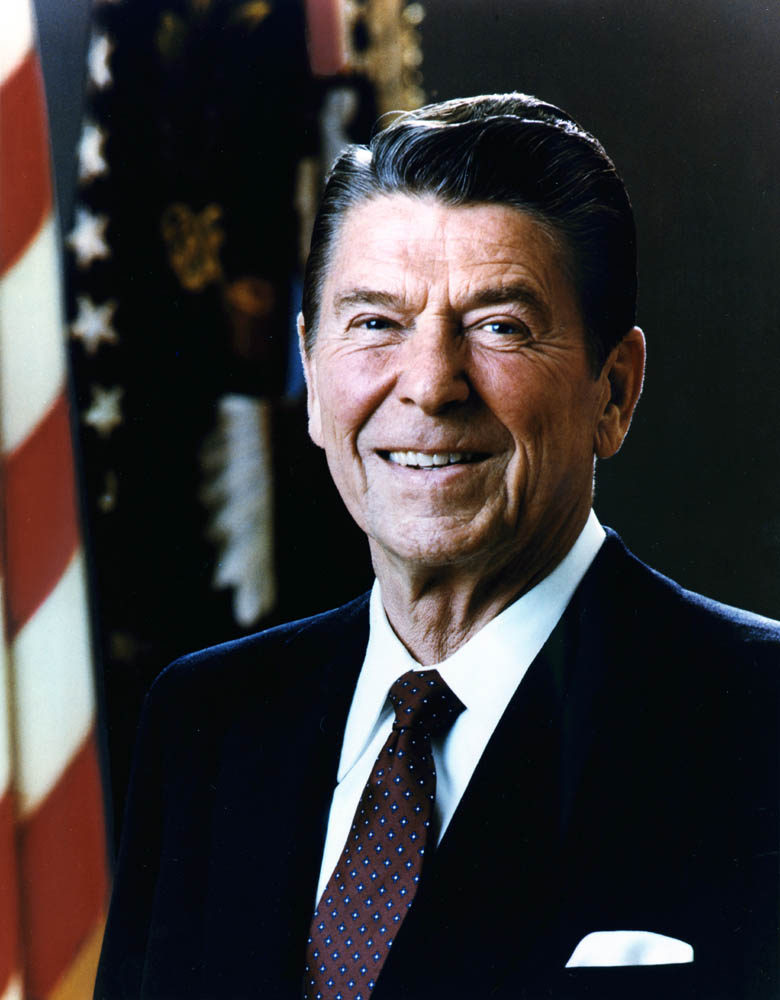 During his remarks in a White House briefing on policy toward the Persian Gulf, Ronald Reagan said the following:
"In summary then, the United States and its allies maintain a presence in the Gulf to assist in the free movement of petroleum, to reassure those of our friends and allies in the region of our commitment to their peace and welfare, to ensure that freedom of navigation and other principles of international accord are respected and observed -- in short, to promote the cause of peace. Until peace is restored and there's no longer a risk to shipping in the region, particularly shipping under American protection, we must maintain an adequate presence to deter and, if necessary, to defend ourselves against any accidental attack or against any intentional attack. As Commander in Chief, it's my responsibility to make sure that we place forces in the area that are adequate to that purpose. Our goal is to seek peace rather than provocation, but our interests and those of our friends must be preserved. We're in the gulf to protect our national interests and, together with our allies, the interests of the entire Western World. Peace is at stake; our national interest is at stake. And we will not repeat the mistakes of the past. Weakness, a lack of resolve and strength, will only encourage those who seek to use the flow of oil as a tool, a weapon, to cause the American people hardship at home, incapacitate us abroad, and promote conflict and violence throughout the Middle East and the world."
Although President Reagan sugar-coated the United States' motives with the word "peace" he nevertheless makes it unmistakably clear that the reason for our presence in the Gulf is to protect our oil interests. (It should be noted that statements such as these made by Presidents and other politicians or organizations are not few and far between. Oil as the underlying motive for US intervention in the Middle East is a universally accepted fact in the political and historical realm. If anyone desires additional resources we will gladly provide them).
George H. W. Bush
 The Presidency of the first President Bush is perhaps most remembered for what is known as the Gulf War or the Persian Gulf War. Iraq who was invading the neighboring country of Kuwait was seen by many in American politics as a threat to our national interests. As the invasion commenced, President Bush offered these words:
Needless to say, we view the situation with the utmost gravity. We remain committed to take whatever steps are necessary to defend our longstanding, vital interests in the Gulf, and I'm meeting this morning with my senior advisers here to consider all possible options available to us.
US forces drove back the Iraqi Army out of Kuwait and pushed the military almost all the way back to the capital city in a short period of time. Bush would later be criticized for not seizing the opportunity to dispose of Saddam Hussein who, although once hailed as an asset in the Middle East, was now considered a threat to US interests. Although many justify our intervention in the Gulf War by arguing that we were protecting the sovereignty of Kuwait, the protection of our oil interests in the Middle East as the real motive was no secret. Here is one more quote from Bush to dissipate any remaining doubt:
Immediately after the Iraqi invasion, I ordered an embargo of all trade with Iraq and, together with many other nations, announced sanctions that both freeze all Iraqi assets in this country and protected Kuwait's assets. The stakes are high. Iraq is already a rich and powerful country that possesses the world's second largest reserves of oil and over a million men under arms. It's the fourth largest military in the world. Our country now imports nearly half the oil it consumes and could face a major threat to its economic independence. Much of the world is even more dependent upon imported oil and is even more vulnerable to Iraqi threats.
The Clinton Years
 It is ironic that in the United States the Democratic Party is considered the Anti-war party whereas the Republicans are considered more prone to use military force; ironic because of the extensive amount of death and destruction that took place under the Clinton years. It should be remembered that much of the inexcusable death in Iraq that is described in our previous post "Paying the Price for the Gulf War" took place under the Clinton administration during which time Clinton also approved at least 3 major air strikes against the country. Clinton explained why he approved one of those strikes (1996) as follows:
Good morning. Today I know the thoughts and prayers of every American are with our men and women in uniform serving in the Persian Gulf, standing up for America's interests. I want to speak with you about why, 10 days ago, I ordered our Armed Forces to strike Iraq, what we have accomplished and where we go from here. America's vital interests in the Persian Gulf are constant and clear: to help protect our friends in the region against aggression, to work with others in the fight against terrorism, to preserve the free flow of oil, and to build support for a comprehensive Middle East peace. Any group or nation that threatens the stability of the region threatens those interests. For the past five years, Saddam Hussein has repeatedly threatened the stability of the Persian Gulf and our allies, Saudi Arabia and Kuwait. Time and again, he has lashed out recklessly against his neighbors and against his own people. America's policy has been to contain Saddam, to reduce the threat he poses to the region, and to do it in a way that makes him pay a price when he acts recklessly. That is why, when Saddam sent his troops to the Kurdish city of Urbil in Northern Iraq two weeks ago, we responded -- strongly, immediately and strategically. If we had failed to answer Saddam's provocation, he would have been emboldened to act even more recklessly and in a manner more dangerous to our interests. That is why we did respond and why we did so in a way that made our interests more secure. We acted in Southern Iraq, where our interests are the most vital and where we had the capacity to increase the international community's ability to deter aggression by Saddam against his neighbors.
Once again, there is an attempt to sugar-coat the issue. In this statement, Clinton adds to the list of vital interests stability, terrorism, and peace. Keep in mind however that the reason America has an interest in peace and stability in the Middle East, which "terrorism" threatens is because of our vital oil interests in the region. It is not difficult to see that it would be impractical and simply impossible for the United States to intervene militarily every time there exists terrorism, instabililty, and/or a lack of peace anywhere in the world. It can only be concluded therefore that the determining factor is that which was also acknowledged by Clinton and his predecessors: oil.
Clinton's "National Security Strategy for a New Century." (As you read these excerpts, keep in mind that this was published in January of 2000 - the last year of his Presidency and the year George W Bush was elected):
 Providing for Energy Security
The United States depends on oil for about 40 percent of its primary energy needs, and roughly half of our oil needs are met with imports. And although we import less than 15% of the oil exported from the Persian Gulf, our allies in Europe and Japan account for about 80% of those exports. The United States is undergoing a fundamental shift away from reliance on Middle East oil. Venezuela is our number one foreign supplier, and Africa supplies 15% of our imported oil. Canada, Mexico and Venezuela combined supply almost twice as much oil to the United States as the Arab OPEC countries. The Caspian Basin, with potential oil reserves of 160 billion barrels, promises to play an increasingly important role in meeting rising world energy demand in coming decades.
Although Bill Clinton describes a break away from Middle Eastern oil, he later in the same document explains why the Middle East will always be of strategic importance to the United States even if it does not personally need its oil:
Although the United States imports less than 15% of the oil exported from the Persian Gulf, the region will remain of vital strategic importance to U.S. national security due to the global nature of the international oil market. Previous oil shocks and the Gulf War underscore that any blockage of Gulf supplies or a substantial increase in price would immediately affect the international market, driving up energy costs everywhere -- ultimately harming the U.S. economy as well as the economies of our key economic partners in Europe and Japan. Appropriate responses to events such as Iraq's invasion of Kuwait can limit the magnitude of a crisis in the Gulf and its impact on world oil markets. Over the longer term, U.S. dependence on access to these and other foreign oil sources will remain important as our reserves are depleted. That is one of many important reasons why the United States must continue to demonstrate commitment and resolve in the Persian Gulf.
Clinton goes on to admit that the US will always have an interest in foreign oil producing regions, even should we achieve energy independence, suggesting (as do the previous quotes) that the US has interests in controlling the oil market rather than just having access to it ourselves:
Conservation and energy research notwithstanding, the United States will continue to have a vital interest in ensuring access to foreign oil sources. We must continue to be mindful of the need for regional stability and security in key producing areas to ensure our access to, and the free flow of, these resources.
Notice that Clinton acknowledges in the above quote that our interest in maintaining regional stability and security is to, "ensure our access to, and the free flow of, [oil]." Further on in the document, Clinton continues to explain America's policy toward Saddam Hussein and Iraq:
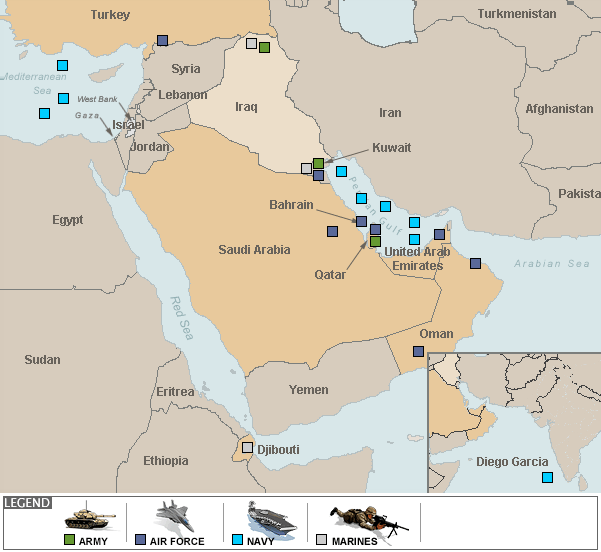
In Southwest Asia [the Middle East], the United States remains focused on deterring threats to regional stability and energy security, countering threats posed by WMD, and protecting the security of our regional partners, particularly from the threats posed by Iraq and Iran... We will maintain an appropriate military presence in Southwest Asia using a combination of ground, air and naval forces. We maintain a continuous military presence in the Gulf to enhance regional stability and support our on-going efforts to bring Iraq into compliance with UN Security Council resolutions. Our forces in the Gulf are backed by our ability to rapidly reinforce the region in time of crisis, which we have demonstrated convincingly... Our policy toward Iraq is comprised of three central elements: containment and economic sanctions, to prevent Saddam from again threatening the stability of the vital Gulf region; relief for the Iraqi people from humanitarian suffering via the UN oil-for-food program; (consider the irony in that last statement in light of the horrible level of human suffering that our sanctions were causing in Iraq. See "Paying the Price for the Gulf War") and support to those Iraqis seeking to replace Saddam's regime with a government that can live at peace with its neighbors and its people. Operation Desert Fox in December 1998 successfully degraded the threat posed by Iraqi WMD in the wake of Baghdad's decision to cease cooperation with UN weapons inspectors... We have consistently maintained that the Iraqi regime can only have sanctions lifted when it has met its obligations to the international community. Saddam's actions over the past decade make clear that his regime will not comply with its obligations under the UN Security Council resolutions designed to rid Iraq of WMD and their delivery systems. Because of that and because the Iraqi people will never be free under the brutal dictatorship of Saddam Hussein, we actively support those who seek to bring a new democratic government to power in Baghdad. We recognize that this may be a slow and difficult process, but we believe it is the only solution to the problem of Saddam's regime.
Perhaps of most importance from this last quote is Clinton's acknowledgement of the desire to dispose of Saddam Hussein.
Before we move on to George W. Bush, let's further establish the intent of the United States to rid Iraq of Saddam Hussein for the purpose of protecting oil interests, a view that was shared by many in Washington, especially by those who would later form the core of the Bush administration.
The Project for the New American Century
 The Project for the New American Century (PNAC, pronounced "P-nack") was formed in 1997 by many former George H.W. Bush administration officials and other influential leaders in Washington. PNAC serves as a "think tank" to influence U.S. policy using issue briefs, articles, letters, reports, and so on. Many of these same men later became part of the current Bush Administration. Among the members of PNAC were Vice President Dick Cheney, former Secretary of Defense Donald Rumsfeld, former Deputy Secretary of Defense Paul Wolfowitz, former Chief of Staff and the Vice President's Assistant for National Security Affairs Lewis "Scooter" Libby, and many other Bush administration officials. Needless to say, the political ideology of PNAC created the political ideology of the Bush administration; the Bush administration was essentially made up of PNAC. These men, known as the "neoconservatives", promoted the most aggressive US foreign policy to date. Paul Wolfowitz and Scooter Libby authored the Defense Planning Guide in 1992 that was the foundation of the "Wolfowitz doctrine." The document was leaked to the New York Times, and while there is much information of notable value, we will cite only that which pertains to the Middle East. It is important to know that Paul Wolfowitz would later be considered perhaps the strongest voice in support of the 2003 invasion of Iraq:
 Middle East and Southwest Asia
In the Middle East and Southwest Asia, our overall objective is to remain the predominant outside power in the region and preserve U.S. and Western access to the region’s oil. We also seek to deter further aggression in the region, foster regional stability, protect U.S. nationals and property, and safeguard our access to international air and seaways. As demonstrated by Iraq’s invasion of Kuwait, it remains fundamentally important to prevent a hegemon or alignment of powers from dominating the region. This pertains especially to the Arabian peninsula. Therefore, we must continue to play a role through enhanced deterrence and improved cooperative security.
The 1992 Defense Planning Guidance was consistent with the foreign policies of Carter, Reagan, Bush and the next president, Clinton: 1) all sought to maintain exclusive control of the Persian Gulf, fending off outside threats (USSR) 2) all sought to maintain internal control of the region, not allowing an alliance of power (Iraqi invasion of Kuwait) and 3) all sought to deter instability although US involvement has always led to greater instability, giving us an ever increasing excuse to maintain a military presence.
The fundamental idea behind the Wolfowitz Doctrine and the Defense Planning Guidance document was to maintain America's position as the sole-superpower in the post-Cold War world. This would later be reflected in PNAC. From the "About us" section of their website:
Established in the spring of 1997, the Project for the New American Century [PNAC] is a nonprofit, educational organization whose goal is to promote American global leadership.
In their "Statement of Principles," PNAC asserts that the US must maintain:
...a military that is strong and ready to meet both present and future challenges; a foreign policy that boldly and purposefully promotes American principles abroad; and national leadership that accepts the United States' global responsibilities.
Of course, the United States must be prudent in how it exercises its power. But we cannot safely avoid the responsibilities of global leadership or the costs that are associated with its exercise. America has a vital role in maintaining peace and security in Europe, Asia, and the Middle East. If we shirk our responsibilities, we invite challenges to our fundamental interests.
The history of the 20th century should have taught us that it is important to shape circumstances before crises emerge, and to meet threats before they become dire.
Many people are unaware that removing Saddam Hussein from power had long been the government's goal. How aggressively to go about it was the focus of debate, not whether or not it should be done. Early in 1998, before his State of the Union address, PNAC wrote a letter to Bill Clinton urging him to take advantage of the opportunity,
to enunciate a new strategy that would secure the interests of the U.S. and our friends and allies around the world. That strategy should aim, above all, at the removal of Saddam Hussein’s regime from power. We stand ready to offer our full support in this difficult but necessary endeavor...
Such uncertainty will, by itself, have a seriously destabilizing effect on the entire Middle East. It hardly needs to be added that if Saddam does acquire the capability to deliver weapons of mass destruction, as he is almost certain to do if we continue along the present course, the safety of American troops in the region, of our friends and allies like Israel and the moderate Arab states, and a significant portion of the world’s supply of oil will all be put at hazard.
Such uncertainty will, by itself, have a seriously destabilizing effect on the entire Middle East. It hardly needs to be added that if Saddam does acquire the capability to deliver weapons of mass destruction, as he is almost certain to do if we continue along the present course, the safety of American troops in the region, of our friends and allies like Israel and the moderate Arab states, and a significant portion of the world’s supply of oil will all be put at hazard.
...this means a willingness to undertake military action as diplomacy is clearly failing. In the long term, it means removing Saddam Hussein and his regime from power. That now needs to become the aim of American foreign policy.
We believe the U.S. has the authority under existing UN resolutions to take the necessary steps, including military steps, to protect our vital interests in the Gulf. In any case, American policy cannot continue to be crippled by a misguided insistence on unanimity in the UN Security Council.
It is important to note that the reason for disposing of Saddam Hussein was to protect our vital interests: oil. The letter is signed by Donald Rumsfeld, Paul Wolfowitz, and Robert Zoellick among others. Although Clinton did not enunciate a strategy to remove Saddam Hussein from power in his State of the Union address that year, he did rouse fear toward Iraq by using blatant lies to fuel the flames of the WMD scare regarding Iraq by saying:
Together, we also must also confront the new hazards of chemical and biological weapons, and the outlaw states, terrorists and organized criminals seeking to acquire them. Saddam Hussein has spent the better part of this decade, and much of his nation's wealth, not on providing for the Iraqi people, but on developing nuclear, chemical, and biological weapons -- and the missiles to deliver them. The United Nations weapons inspectors have done a truly remarkable job, finding and destroying more of Iraq's arsenal than was destroyed during the entire Gulf War. Now Saddam Hussein wants to stop them from completing their mission.
I know I speak for everyone in this chamber, Republicans and Democrats, when I say to Saddam Hussein: You cannot defy the will of the world. (Applause.) And when I say to him: You have used weapons of mass destruction before; we are determined to deny you the capacity to use them again. (Applause.)
Later that year Clinton would bomb Iraq for the third time in his term. Dissatisfied by Clinton's performance, PNAC wrote a follow-up letter - also signed by Wolfowitz, Rumsfeld, and Zoellick - to the Speaker of the House and the Senate Majority leader requesting that they adopt the proposed policy regarding Saddam Hussein that Clinton apparently had not.
On January 26, we sent a letter to President Clinton expressing our concern that the U.S. policy of "containment" of Saddam Hussein was failing. The result, we argued, would be that the vital interests of the United States and its allies in the Middle East would soon be facing a threat as severe as any we had known since the end of the Cold War...
We should establish and maintain a strong U.S. military presence in the region, and be prepared to use that force to protect our vital interests in the Gulf - and, if necessary, to help remove Saddam from power...
Congress should adopt the measures necessary to avoid this impending defeat of vital U.S. interests.
This letter brings up a very important factor in PNAC's policy that was not addressed in the letter to Clinton, namely their desire to, "establish and maintain a strong U.S. military presence in the region... to protect our vital interests in the Gulf." This would be seen in greater detail in a PNAC report published two months before the election of George W. Bush.
Rebuilding America's Defenses
One of PNACs most well-known publications is a report called "Rebuilding America's Defenses" published in September 2000. This report, based on the neoconservative imperial principles already cited, serves as an outline for a substantial transformation of American military in order to maintain America's position as the Sole-superpower in the world. Accomplishing this would require a permanent allocation of US troops in Europe, Southeast Asia, and the Middle East. This document acknowledges the fact that the US had for decades sought a greater military presence in the Middle East. The article also points out that the benefits of having a military presence transcends the "conflict" with Saddam Hussein and the current tension with Iran and points out that while those conflicts provided "justification" for military action, the ultimate goal would be to establish a permanent military presence to protect our "enduring American interests in the region", or oil. Lastly, they point out that this transformation is likely to be a long process unless there is, "some catastrophic and catalyzing event – like a new Pearl Harbor.":
REBUILDING AMERICA'S DEFENSES
Strategy, Forces and Resources For a New Century
A Report of The Project for the New American Century
September 2000
[The] Clinton Administration has continued the fiction that the operations of American forces in the Persian Gulf are merely temporary duties. Nearly a decade after the Gulf War, U.S. air, ground and naval forces continue to protect enduring American interests in the region. In addition to rotational naval forces, the Army maintains what amounts to an armored brigade in Kuwait for nine months of every year; the Air Force has two composite air wings in constant "no-fly zone" operations over northern and southern Iraq. And despite increasing worries about the rise of China and instability in Southeast Asia, U.S. forces are found almost exclusively in Northeast Asian bases…
In sum, the 1990s have been a "decade of defense neglect." This leaves the next president of the United States with an enormous challenge: he must increase military spending to preserve American geopolitical leadership, or he must pull back from the security commitments that are the measure of America's position as the world's sole superpower and the final guarantee of security, democratic freedoms and individual political rights. This choice will be among the first to confront the president: new legislation requires the incoming administration to fashion a national security strategy within six months of assuming office, as opposed to waiting a full year, and to complete another quadrennial defense review three months after that. In a larger sense, the new president will choose whether today's "unipolar moment," to use columnist Charles Krauthammer's phrase for America's current geopolitical preeminence, will be extended along with the peace and prosperity that it provides… Thus, facing up to the realities of multiple constabulary missions will require a permanent allocation of U.S. armed forces.
Nor can the problem be solved by simply withdrawing from current constabulary missions or by vowing to avoid them in the future. Indeed, withdrawing from today's ongoing missions would be problematic. Although the no-fly-zone air operations over northern and southern Iraq have continued without pause for almost a decade, they remain an essential element in U.S. strategy and force posture in the Persian Gulf region. Ending these operations would hand Saddam Hussein an important victory, something any American leader would be loath to do…
In the Persian Gulf region, the presence of American forces, along with British and French units, has become a semi-permanent fact of life. Though the immediate mission of those forces is to enforce the no-fly zones over northern and southern Iraq, they represent the long-term commitment of the United States and its major allies to a region of vital importance. Indeed, the United States has for decades sought to play a more permanent role in Gulf regional security. While the unresolved conflict with Iraq provides the immediate justification, the need for a substantial American force presence in the Gulf transcends the issue of the regime of Saddam Hussein…
Notice that PNAC stated that achieving the amount of military transformation that they sought and establishing the level of military presence in the Middle East required an issue greater than the problems posed by Saddam Hussein. Terrorism would later provide that transcendent issue.
The continuing challenges from Iraq also make it unwise to draw down forces in the Gulf dramatically. Securing the American perimeter today – and tomorrow – will necessitate shifts in U.S. overseas operations…
After eight years of no-fly-zone operations, there is little reason to anticipate that the U.S. air presence in the region should diminish significantly as long as Saddam Hussein remains in power. Although Saudi domestic sensibilities demand that the forces based in the Kingdom nominally remain rotational forces, it has become apparent that this is now a semi-permanent mission. From an American perspective, the value of such bases would endure even should Saddam pass from the scene. Over the long term, Iran may well prove as large a threat to U.S. interests in the Gulf as Iraq has. And even should U.S.-Iranian relations improve, retaining forward-based forces in the region would still be an essential element in U.S. security strategy given the longstanding American interests in the region.
A point of particular interest here is the degree of importance that PNAC gives to permanent bases in the Middle East. Even if Saddam Hussein were to be replaced with a more agreeable leader in Iraq and even should US-Iranian relation improve, such bases would be essential, "given the longstanding American interests in the region," - oil.
In addition to the aircraft enforcing the no-fly zone, the United States now also retains what amounts to a near-permanent land force presence in Kuwait…
With the rationalization of ground-based U.S. air forces in the region, the demand for carrier presence in the region can be relaxed. As recent strikes against Iraq demonstrate, the preferred weapon for punitive raids is the cruise missile, supplemented by stealthy strike aircraft and longer-range Air Force strike aircraft. Carrier aircraft are most useful in sustaining a campaign begun with missiles and stealth strike aircraft, indicating that a surface action group capable of launching several hundred cruise missiles is the most valuable naval presence in the Gulf. With a substantial permanent Army ground presence in Kuwait, the demands for Marine presence in the Gulf could be scaled back as well…
At the same time, the Army's role in post-Cold-War military operations remains the measure of American geopolitical commitment. In the 1991 Gulf War, the limits of Bush Administration policy were revealed by the reluctance to engage in land combat and the limit on ground operations within the Kuwait theater…
In short, the value of land power continues to appeal to a global superpower, whose security interests rest upon maintaining and expanding a world-wide system of alliances as well as on the ability to win wars. While maintaining its combat role, the U.S. Army has acquired new missions in the past decade – most immediately, missions associated with completing the task of creating a Europe "whole and free" and defending American interests in the Persian Gulf and Middle East.
The Air Force presence in the Gulf region is a vital one for U.S. military strategy, and the United States should consider it a de facto permanent presence, even as it seeks ways to lessen Saudi, Kuwaiti and regional concerns about U.S. presence…
In Europe, the Persian Gulf and East Asia, enduring U.S. security interests argue forcefully for an enduring American military presence…
After the victories of the past century – two world wars, the Cold War and most recently the Gulf War – the United States finds itself as the uniquely powerful leader of a coalition of free and prosperous states that faces no immediate great-power challenge.
The American peace has proven itself peaceful, stable and durable. It has, over the past decade, provided the geopolitical framework for widespread economic growth and the spread of American principles of liberty and democracy. Yet no moment in international politics can be frozen in time; even a global Pax Americana will not preserve itself…
CREATING TOMORROW'S DOMINANT FORCE…
Further, the process of transformation, even if it brings revolutionary change, is likely to be a long one, absent some catastrophic and catalyzing event – like a new Pearl Harbor.
On September 11, 2001, the neoconservatives got their "catalyzing and catastrophic event." Subsequently, the "War on Terror" has been used as a rallying cry to execute precisely what they had already planned. Saddam Hussein was overthrown, we have set up multiple permanent military bases in Iraq and Afghanistan, and for the last few years Iran has been blacklisted and increasingly condemned just as Iraq was previous to its invasion. PNAC prophetically stated, "Iran may well prove as large a threat to U.S. interests in the Gulf as Iraq has." Many predict that Israel will strike Iran before the end of the year and the US would without question get involved in the conflict. With the Afghanistan and Iraq Wars, we already have Iran surrounded on two sides, with troops stationed on the borders.
Is it possible that after almost a century of military intervention in the Middle East driven by our oil interests in the region that our reason for intervening under George W. Bush would be any different? Especially when his very administration had been calling, for years, for the removal of Saddam Hussein from power because of his threat to our oil interests?
George W. Bush
 Former Chairman of the Federal Reserve Alan Greenspan stated in his book The Age of Turbulence: Adventures in a New World, "I am saddened that it is politically inconvenient to acknowledge what everyone knows: the Iraq war is largely about oil." Because of the aggressiveness of the nature of the Iraq war - the United State's first acknowledged pre-emptive strike - the word "oil" has virtually disappeared from the president's vocabulary as it relates to the Iraq War. It is now only referred to as a "natural resource," a "national interest," "vital interest," "economic interest," etc. Still, even in George W. Bush's own words one can see the perpetuation of the long-established American Middle Eastern foreign policy. In a document published in 2005 called the "National Strategy for Victory in Iraq" the Bush administration outlined the benefits of victory and the negative consequences of failure in Iraq:
 THE BENEFITS OF VICTORY IN IRAQ
Helping the people of Iraq is the morally right thing to do -- America does not abandon its friends in the face of adversity. Helping the people of Iraq, however, is also in our own national interest.
If we and our Iraqi partners prevail in Iraq, we will have made America:
Safer...
- by removing Saddam Hussein, a destabilizing force in a vital region, a ruthless dictator who had a history of pursuing and even using weapons of mass destruction, was a state sponsor of terror, had invaded his neighbors, and who was violently opposed to America;
- by depriving terrorists of a safe haven from which they could plan and launch attacks against the United States and American interests;
- by delivering a strategic setback to the terrorists and keeping them on the run;
- by delivering a decisive blow to the ideology that fuels international terrorism, proving that the power of freedom is stronger than a perverse vision of violence, hatred, and oppression.
Stronger...
- by demonstrating to our friends and enemies the reliability of U.S. power, the strength of our commitment to our friends, and the tenacity of our resolve against our enemies;
- by securing a new friend and partner in the fight against terrorism in the heart of the Middle East.
More Certain of its Future ...
- politically, by bolstering democratic reformers -- and the prospects for peaceful, democratic governments -- in a region that for decades has been a source of instability and stagnation;
- economically, by facilitating progressive reform in the region and depriving terrorists control over a hub of the world's economy.
THE CONSEQUENCES OF FAILURE
If we and our Iraqi partners fail in Iraq, Iraq will become:
- A safe haven for terrorists as Afghanistan once was, only this time in some of the world's most strategic territory, with vast natural resources to exploit and to use to fund future attacks.
- A country where oppression -- and the brutal imposition of inhumane practices, such as those of the Taliban in Afghanistan -- is pervasive.
- A failed state and source of instability for the entire Middle East, with all the attendant risks and incalculable costs for American security and prosperity.
Furthermore, if we and our Iraqi partners fail in Iraq, the terrorists will have:
- Won a decisive victory over the United States, vindicating their tactics of beheadings, suicide bombings, and ruthless intimidation of civilians, inviting more deadly attacks against Americans and other free people across the globe
- Placed the American people in greater danger by destabilizing a vital region, weakening our friends, and clearing the way for terrorist attacks here at home. The terrorists will be emboldened in their belief that America cannot stand and fight, but will cut and run in the face of adversity.
- Called into question American credibility and commitment in the region and the world. Our friends and foes alike would doubt our staying power, and this would damage our efforts to counter other security threats and to advance other economic and political interests worldwide. (Since 1998, Al Qaida has repeatedly cited Vietnam, Beirut, and Somalia, as examples to encourage more attacks against America and our interests overseas.)
- Weakened the growing democratic impulses in the region. Middle East reformers would never again fully trust American assurances of support for democracy and pluralism in the region -- a historic opportunity, central to America's long-term security, forever lost.
...a free and prosperous Iraq is in the economic interest of everybody, including Iraq's neighbors and the greater Middle East. A flourishing Iraq can spur economic activity and reform in one of the world's most vital regions.
Bush was perhaps more direct when he said:
Our efforts to advance freedom in Iraq are driven by our vital interests and our deepest beliefs.
http://www.whitehouse.gov/news/releases/2005/12/20051214-1.html
http://www.whitehouse.gov/news/releases/2005/12/20051214-1.html
This year the Department of Defense published the National Defense Strategy which confirms that our foreign policy toward the Middle East and the rest of the world has not changed. It speaks of the continued and in fact increased need to ensure "strategic access" to regions of the world where petroleum is produced and reaffirms the US's policy of transforming the military and increasing our presence in those areas. If the sequence of events after 9/11 was not proof enough, this document demonstrates irrefutably that PNAC's plans have become US policy:
Secure U.S. strategic access and retain freedom of action
The United States requires freedom of action in the global commons and strategic access to important regions of the world to meet our national security needs. The well-being of the global economy is contingent on ready access to energy resources. Notwithstanding national efforts to reduce dependence on oil, current trends indicate an increasing reliance on petroleum products from areas of instability in the coming years, not reduced reliance. The United States will continue to foster access to and flow of energy resources vital to the world economy...
We will continue to transform overseas U.S. military presence through global defense posture realignment, leveraging a more agile continental U.S. (CONUS)-based expeditionary total force and further developing a more relevant and flexible forward network of capabilities and arrangements with allies and partners to ensure strategic access.
The Afghanistan and Iraq Wars were nothing more than an opportunity to dispose of unwanted leaders and set up a strategic military presence in the Middle East to perpetuate US control over the world's largest region of petroleum production. American foreign policy in the Middle East is the same today as it has been for decades.
Iran
Our analysis of the Iraq War would be incomplete without looking forward to Iran. It is appalling and inexcusable that the American public has succumbed to the exact kind of propaganda regarding Iran that it did regarding Iraq 6 years ago. President Ahmadinejad is viewed by most Americans as an "evil dictator" who threatens world peace and is actively pursuing the capability to produce nuclear warheads to attack Israel and the West. For Americans, most world issues have simply been reduced to a "we're good, they're bad," attitude.
Background
Tensions between the West and Iran climaxed in the mid 1900's when the democratically elected President of Iran, Mohammad Mossadeq, nationalized the country's oil production in 1951 (To nationalize a resource is to bring it under the ownership or control of that nation). In consequence, British investors lost their oil concessions that they had won after World War II. Under the guise of protecting Iran from monarchial takeover and communistic threat, the United States secured the West's oil interests in Iran through a secretly executed military coup as can be seen in the Library of Congress Country Studies report on Iran:
 The administration of President Harry S Truman initially had been sympathetic to Iran's nationalist aspirations. Under the administration of President Dwight D. Eisenhower, however, the United States came to accept the view of the British government that no reasonable compromise with Mossadeq was possible and that, by working with the Tudeh, Mossadeq was making probable a communist-inspired takeover. Mossadeq's intransigence and inclination to accept Tudeh support, the Cold War atmosphere, and the fear of Soviet influence in Iran also shaped United States thinking. In June 1953, the Eisenhower administration approved a British proposal for a joint Anglo-American operation, code-named Operation Ajax, to overthrow Mossadeq. Kermit Roosevelt of the United States Central Intelligence Agency (CIA) traveled secretly to Iran to coordinate plans with the shah and the Iranian military, which was led by General Fazlollah Zahedi.
In accord with the plan, on August 13 the shah appointed Zahedi prime minister to replace Mossadeq. Mossadeq refused to step down and arrested the shah's emissary. This triggered the second stage of Operation Ajax, which called for a military coup. The plan initially seemed to have failed, the shah fled the country, and Zahedi went into hiding. After four days of rioting, however, the tide turned. On August 19, pro-shah army units and street crowds defeated Mossadeq's forces. The shah returned to the country. Mossadeq was sentenced to three years' imprisonment for trying to overthrow the monarchy, but he was subsequently allowed to remain under house arrest in his village outside Tehran until his death in 1967. His minister of foreign affairs, Hosain Fatemi, was sentenced to death and executed. Hundreds of National Front leaders, Tudeh Party officers, and political activists were arrested; several Tudeh army officers were also sentenced to death.
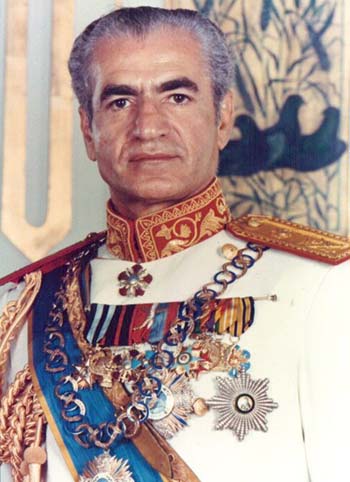 US and Israeli intelligence subsequently helped set up the Iranian intelligence organization SAVAK which was used to subdue opposition to the dictatorship of the Shah using torture and executions of opposing citizens and Iran suffered under US-backed dictatorial rule until 1979. It can be seen that for the United States, protecting economic interests trumps respect for democracy, freedom, the sovereignty of other nations, and human life. Indeed, the United States has been involved in the overthrow of dozens of governments since WWII for generally the same reason they overthrew Mossadeq's government in Iran - disposing of leaders who support nationalizing resources so that we might have access to those resources ourselves. Literally millions of innocent people have died in the process and countless others left to suffer the consequences of immoral governments and impoverished lifestyles. Considering the reality of the history of US involvement in Iran, it is no wonder that many have negative feelings toward the US and Israel. It would be analogous to China overthrowing our government here in America that we had elected and then setting up a dictatorship to ensure their access to our most abundant resources. Indeed, Iran not only has every right to dislike the United States but to defend itself militarily against us.
Today general American sentiment toward Iran is eerily resemblant of American sentiment toward Iraq previous to the '03 invasion, and for almost exactly the same reasons. Politicians and the media continue to engage in an outpouring of war propaganda claiming that the government of Iran is hostile, supporting terrorism and actively pursuing nuclear weapons. The phrase "wipe Israel off the map" has been falsely attributed to the president of Iran to paint the image of an angry militaristic leader who is often compared to Hitler by many political commentators on various news stations. Just as the WMD scare however, their is little or no evidence for any of America's accusations regarding Iran. We have been fooled as a nation once again by the very same people who deceived us less than a decade ago and we will surely be held accountable for our disastrous and violent negligence.
 Also akin to the Iraq conflict, George W. Bush has used protecting our vital interests in the Persian Gulf as a talking point against Iran. In his remarks to Iran in the State of the Union Address in January of this year he said:
Our message to the leaders of Iran is... clear: Verifiably suspend your nuclear enrichment, so negotiations can begin. And to rejoin the community of nations, come clean about your nuclear intentions and past actions, stop your oppression at home, cease your support for terror abroad. But above all, know this: America will confront those who threaten our troops. We will stand by our allies, and we will defend our vital interests in the Persian Gulf. (Applause.)
Just as the overthrow of Mossadeq had more to do with the nationalization of oil than it did with the threat of communism, is it hard to believe that the current war propaganda directed toward Ahmadinejad has more to do with protecting oil than it does with nuclear weapons and fighting terrorism?
It can sometimes be difficult to look truth in the face, especially when that truth seems to contradict everything you have been trained to believe by the government, the media, our education system etc. However difficult though, we must look at the facts and understand them as best we can if we are ever to effect real change. The consequences of not coming to an understanding of the truth are too grave. Recall for a moment the shock, the confusion, the fear, and sadness that was experienced by our country on 9/11 and then consider the death and destruction that has taken place in the Middle East in response. More innocent civilians died in the initial bombings in Afghanistan than died on September 11 - entire villages were eliminated. What is it all for? Who is really paying the price? Even if our foreign policy really were about terrorism, would we be justified? Would it be worth overthrowing governments, destroying communities, and shattering countless lives, innocent lives? Then consider the truth - that it is all based on oil, economic control, and world power.
Subscribe to:
Posts (Atom)